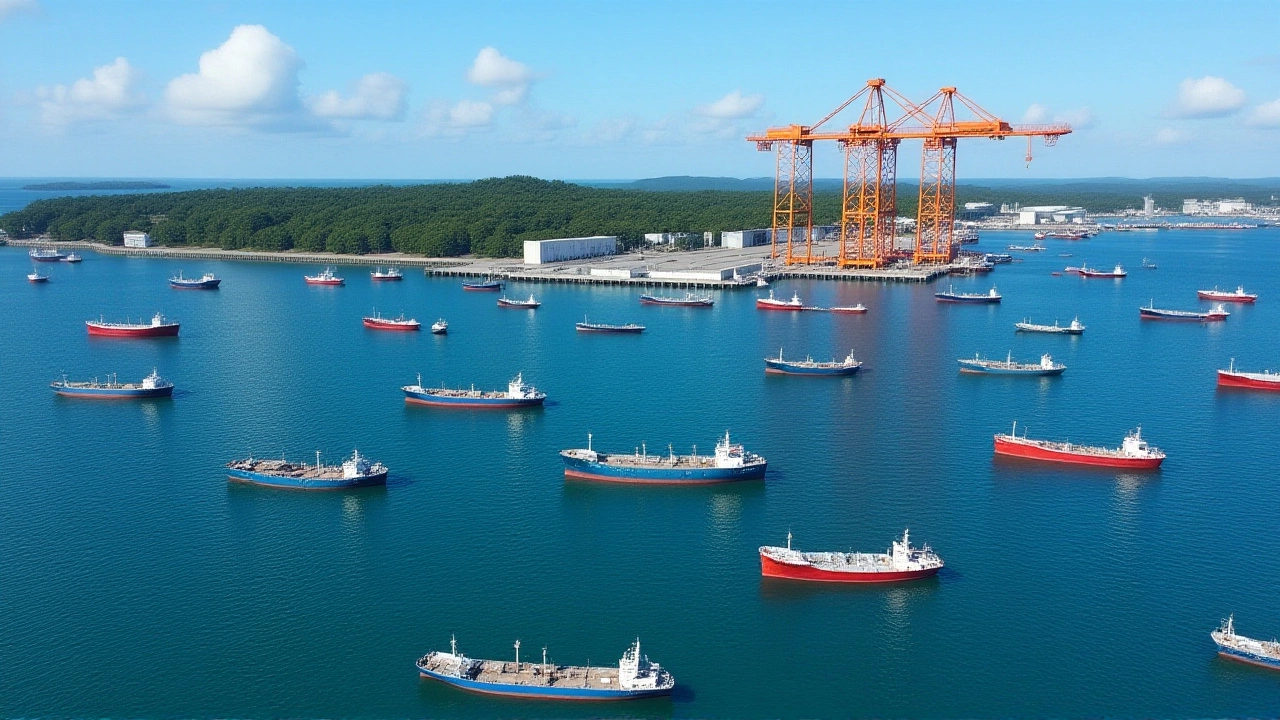
Here’s the twist nobody saw coming from Tehran: Iran is ready to reopen the Strait of Hormuz to commercial shipping. On May 24, 2026, officials announced a plan to restore traffic to pre-conflict levels within just 30 days. It’s a massive shift for global energy markets that have been holding their breath since the recent military escalations.
The move comes after weeks of heightened tension following joint strikes by Israel and the United States. But wait—this isn’t a full return to normalcy. While ships will flow again, the security landscape remains strictly controlled. The details are still emerging, but one thing is clear: the world’s most critical oil chokepoint is opening up, albeit on new terms.
A Fragile Truce Over Global Energy Lifelines
The announcement wasn’t made in isolation. It appears to be part of a broader diplomatic understanding involving multiple nations. Donald Trump, President of the United States, took to social media to confirm that a deal is "almost finalized" between the U.S., Iran, and several regional partners. He specifically noted that reopening the strait is a central component of this agreement.
"The deal includes reopening Hormuz," Trump wrote, adding that an official announcement would follow soon. This public endorsement suggests Washington sees economic stability as a priority over continued containment. For global traders, this is a relief signal. However, Iranian authorities were careful to manage expectations. They emphasized that while vessel numbers would rise, the strategic and security posture would remain tighter than before the conflict.
Think of it like a highway reopening after an accident. The lanes are open, but there are more police checkpoints, speed limits, and surveillance cameras than ever before. Iran wants the revenue from transit fees and reduced international pressure, but it refuses to compromise on its perceived national security needs.
Why the Strait Matters More Than You Think
To understand why this news sent ripples through stock exchanges worldwide, you need to grasp the sheer volume passing through this narrow waterway. Approximately 21% of the world’s total oil consumption flows through the Strait of Hormuz. That’s roughly 21 million barrels per day.
When Iran closed the strait earlier this year, citing security concerns amid the Israel-U.S. strikes, the immediate effect was panic. Shipping companies scrambled to find alternative routes, which are significantly longer and more expensive. The Cape of Good Hope route around Africa adds thousands of miles and weeks to delivery times. Consequently, transportation costs skyrocketed, and crude oil prices spiked.
In New Delhi, the impact was felt at the pump. At the time of the closure, petrol prices stood at ₹94.77 per liter, while diesel was ₹87.67 per liter. Analysts warned that prolonged blockage could push these figures even higher, destabilizing local economies already grappling with inflation. Now, with the promise of normalization, those price pressures may ease—but only if the transition is smooth.
The Security Caveat: Business as Usual? Not Quite.
Here’s the thing: Iran’s statement included a crucial caveat. They explicitly stated that the "security and strategic situation will not be the same as before." What does that mean for shipowners?
It means increased scrutiny. Vessels passing through may face stricter inspections, mandatory reporting requirements, or designated corridors. The Iranian Navy and Revolutionary Guard Corps will likely maintain a heavier presence, ensuring no hostile actions occur near their borders. For insurers, this translates to higher risk premiums, at least initially.
This dual approach—economic openness paired with military vigilance—is typical of Tehran’s strategy. They want to alleviate the economic sanctions’ bite without conceding geopolitical leverage. It’s a delicate balancing act. If they appear too weak, domestic hardliners might criticize them. If they appear too aggressive, international trade dries up again.

Global Reactions and Market Implications
Markets reacted swiftly to the news. Oil futures dipped slightly on the back of the announcement, reflecting investor optimism. However, caution remains. Many analysts point out that the 30-day timeline is ambitious. Restoring trust among shipping lines takes time, especially after months of uncertainty.
European and Asian importers, who rely heavily on Gulf oil, are watching closely. Any hiccup in the implementation of this plan could trigger another spike in energy costs. Meanwhile, the U.S. has signaled it will monitor compliance closely, using satellite imagery and naval patrols to ensure no illicit activities resume under the guise of legitimate trade.
The involvement of other regional powers adds another layer of complexity. Reports suggest that neighboring Gulf states have played a mediating role, facilitating dialogue between Tehran and Washington. Their interest is self-evident: they need stable neighbors and secure export routes for their own oil production.
What Happens Next?
The next few weeks will be critical. We’ll likely see a phased reopening, starting with smaller vessels and gradually increasing capacity. Insurance rates will be a key indicator of confidence—if they drop, the market believes the risk is manageable. If they stay high, skepticism remains.
Diplomatically, this could mark the beginning of a broader de-escalation. Or it could be a temporary pause before the next flare-up. History shows that tensions in the Middle East rarely disappear completely; they simmer. But for now, the immediate crisis of blocked supply chains seems to be easing.
Frequently Asked Questions
When exactly will the Strait of Hormuz fully reopen?
Iran has set a target of 30 days from May 24, 2026, to restore commercial traffic to pre-conflict levels. However, this will likely be a gradual process rather than an immediate switch-flip. Initial phases may involve limited vessel types, with full normalization expected by late June 2026.
Will oil prices drop immediately?
Not necessarily overnight. While the announcement has calmed some fears, actual price drops depend on verified increases in throughput. Markets often price in expectations early, so we might see a modest decline first, followed by stabilization once regular shipping resumes.
Is it safe for ships to pass through now?
Safety protocols have tightened. Iran stated that the security environment is different, implying stricter oversight. While the threat of blockade is gone, vessels should expect enhanced monitoring and potential delays for inspections. Insurance costs may reflect this elevated risk profile temporarily.
What role did Donald Trump play in this agreement?
President Trump publicly acknowledged that a deal involving the U.S., Iran, and regional partners is nearly complete. His social media posts confirmed that reopening the strait is a core element of this diplomatic effort, signaling strong U.S. support for restoring free navigation.
How does this affect India's fuel prices?
India imports a significant portion of its crude oil from the Gulf region. A stable Strait of Hormuz reduces transportation costs and supply risks, which can help stabilize or potentially lower retail petrol and diesel prices in cities like New Delhi, where prices were previously hovering around ₹94.77 per liter for petrol.

Rohit Chaturvedi
I am Rohit Chaturvedi, a seasoned journalist and content creator with expertise in news, small business, sports, and travel. My passion lies in sharing stories from the rich and diverse Indian landscape, covering everything from local news to cultural insights. As a well-traveled writer, I enjoy exploring unique perspectives on Indian life, highlighting the challenges and triumphs of the people and places I encounter. I take great pride in bringing authentic and engaging narratives to my readers, fostering a deeper understanding of the incredible tapestry that is India.
More Articles

What do you think about WION News?
WION News is an Indian news channel that is broadcasted globally. It provides news about India and other parts of the world. It is known for its unbiased and balanced reporting. WION News also covers various topics such as entertainment, sports, lifestyle, and business. It provides a platform to discuss and debate current events and issues. The channel also has a dedicated team of reporters who are often seen in the field, bringing viewers the latest news. Overall, WION News is a reliable source of information and news for people around the world.
Bangladesh crush West Indies by 179 runs to seal 2-1 ODI series win in Dhaka
Bangladesh defeated West Indies by 179 runs in Dhaka on October 23, 2025, to win the ODI series 2-1, marking their second-largest ODI victory ever and fourth straight home series win over the Caribbean side.

KL Rahul and Athiya Shetty reveal baby daughter’s name Evaarah on his 33rd birthday
KL Rahul and Athiya Shetty revealed their daughter Evaarah Vipula Rahul’s name and first photo on his 33rd birthday, calling her a 'Gift of God'—a quiet, heartfelt moment amid AI-generated fake photos and public scrutiny.