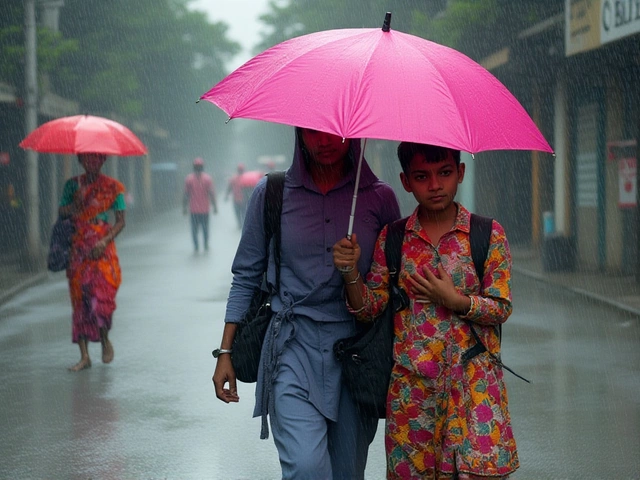
When Indian Meteorological Department (IMD) issued its latest advisory this week, it wasn't just a routine update. It was a stark warning for over 17 states across the country. From April 17 to April 20, residents can expect a volatile mix of heavy rainfall, lightning strikes, and gusty winds. The twist? While some regions brace for downpours, others are simultaneously battling severe heatwaves.
The forecast covers a critical window from April 17 to April 20, with specific alerts extending into late April for certain zones. Here’s the thing: the weather pattern is shifting rapidly due to pre-monsoon activity and western disturbances, creating a chaotic atmosphere that demands immediate attention from travelers and locals alike.
A Storm Brews in the Northeast and Himalayas
The northeastern corridor is looking particularly wet. Between April 17 and April 20, states like Arunachal Pradesh, Assam, Meghalaya, Manipur, Mizoram, Tripura, and Nagaland are under watch for continuous or intermittent rain accompanied by thunderstorms. It’s not just drizzle; the IMD has flagged these areas for significant electrical activity.
Up north, the mountainous regions aren’t spared either. Jammu & Kashmir and Ladakh face rain and thunderstorms from April 17 to April 19. This instability then trickles down to Himachal Pradesh, Uttarakhand, Chandigarh, Delhi, and Rajasthan, where scattered light rain and lightning are expected. These conditions align with the influence of a western disturbance moving across northern India, though the agency hasn’t explicitly detailed the meteorological mechanics in every press note.
In the sub-Himalayan belts of West Bengal and Sikkim, the outlook is similar. From April 17 to April 19, expect sporadic to light rain, thunder, and strong winds. By April 18, West Bengal and Sikkim might see isolated heavy rain, signaling a spike in intensity beyond normal pre-monsoon showers.
Central and Southern India Face Turbulence
Move toward the center of the country, and the picture changes slightly but remains hazardous. Western Madhya Pradesh could see scattered light rain, thunder, and winds reaching speeds of 30–40 km/h on April 19 and 20. Further east, Vidarbha and Chhattisgarh are warned about lightning risks on April 20 alone.
Southern India is also in the crosshairs. Coastal Andhra Pradesh and Yanam are bracing for thunder and wind gusts up to 40 km/h starting April 17. Interior Karnataka joins the list on April 19 and 20. The danger here isn’t just water; it’s the wind. Gusts between 30 and 50 km/h can topple weak structures or trees, posing a direct safety risk to urban infrastructure.
Tamil Nadu presents a unique challenge. Despite recent monsoon rains, the state is facing another five-day alert for heavy rain and winds hitting 40–50 km/h. It’s a reminder that pre-monsoon systems can be as punishing as the main season itself.
The Dual Threat: Rain vs. Heatwaves
But wait—it’s not all rain. While the west and northeast get soaked, central and northwestern India are heating up. The IMD has issued heatwave warnings for Eastern and Western Madhya Pradesh, Vidarbha, Chhattisgarh, Odisha, Jharkhand, Marathwada, and Central Maharashtra until April 23.
Temperatures in parts of Rajasthan and Uttar Pradesh could soar 3–5°C above normal during the last week of April. Meanwhile, coastal areas in Odisha, West Bengal, Gujarat, and southern India will experience "hot and humid" conditions. This combination—high heat plus high humidity—is dangerous for human health, increasing the risk of heatstroke and dehydration even if you’re not sweating profusely.

What Experts Are Saying
The complexity of this forecast lies in the simultaneous occurrence of opposing weather phenomena. Dr. Naresh Kumar, a senior scientist at the IMD, noted in recent briefings that cyclonic circulation combined with incoming western disturbances creates this erratic behavior. "We are seeing a classic pre-monsoon setup," he explained, emphasizing that the transition period is inherently unstable.
Another key figure, Dr. Akhil Srivastava, highlighted the need for vigilance in urban centers like Delhi and Mumbai, where drainage systems may struggle with sudden bursts of heavy rain. The official contact window for media queries remains 10:00 AM to 5:00 PM at the Weather Building on Lodhi Road, New Delhi.
Key Facts at a Glance
- Timeline: Primary alerts active from April 17 to April 20, with heatwaves lasting until April 23.
- Wind Speeds: Gusts of 30–50 km/h expected in coastal and central regions.
- High-Risk Zones: Northeast India, Western Ghats, and the Gangetic plains.
- Heat Alert: Temperatures 3–5°C above average in Rajasthan and UP.
- Special Warning: Isolated hailstorms possible in some districts, though not specifically mapped yet.

Historical Context: Why This Matters Now
This isn’t an isolated event. Over the past decade, India has seen an increase in "rogue" pre-monsoon storms. In 2023, similar patterns led to widespread flooding in Kerala and Karnataka weeks before the official monsoon arrival. The current forecast mirrors those trends, suggesting that climate variability is making seasonal transitions more violent and less predictable.
Comparatively, the August forecasts mentioned in some reports (covering August 17–23) highlight how different mechanisms drive summer rains versus monsoon rains. However, the immediate concern is the April volatility. Unlike the steady monsoon, these pre-monsoon bursts are short-lived but intense, catching people off guard.
What’s Next?
Residents in affected areas should secure loose outdoor objects and avoid traveling through low-lying areas prone to waterlogging. Farmers in central India need to monitor soil moisture levels carefully, as sudden rain followed by intense heat can damage crops. The IMD will likely issue updated bulletins every 12 hours as the system evolves.
Frequently Asked Questions
Which states are most affected by the heavy rain alert?
Over 17 states are under alert, with the highest impact expected in the Northeast (Assam, Meghalaya, etc.), Jammu & Kashmir, and coastal Karnataka and Andhra Pradesh. These regions face heavy to very heavy rain and thunderstorms between April 17 and April 20.
Is there a risk of hailstorms alongside the rain?
Yes, the IMD has mentioned the possibility of isolated hailstorms in some regions. While specific districts haven't been listed in the general summary, areas experiencing severe thunderstorms—particularly in the plains of North and Central India—are at higher risk.
How long will the heatwave last in central India?
Heatwave conditions are expected to persist until April 23 in states like Madhya Pradesh, Chhattisgarh, and parts of Maharashtra. Temperatures may exceed normal averages by 3–5°C, posing health risks to vulnerable populations.
What wind speeds are predicted for coastal areas?
Coastal Andhra Pradesh, Tamil Nadu, and Karnataka may experience wind gusts ranging from 30 to 50 km/h. In Tamil Nadu, winds could hit the higher end of this spectrum (40–50 km/h), potentially causing structural damage to weak buildings.
Who can I contact for official weather updates?
For official inquiries, the Indian Meteorological Department accepts questions between 10:00 AM and 5:00 PM at their headquarters in New Delhi. Senior scientists Dr. Naresh Kumar and Dr. Akhil Srivastava serve as key contacts for media and public relations regarding these forecasts.

Rohit Chaturvedi
I am Rohit Chaturvedi, a seasoned journalist and content creator with expertise in news, small business, sports, and travel. My passion lies in sharing stories from the rich and diverse Indian landscape, covering everything from local news to cultural insights. As a well-traveled writer, I enjoy exploring unique perspectives on Indian life, highlighting the challenges and triumphs of the people and places I encounter. I take great pride in bringing authentic and engaging narratives to my readers, fostering a deeper understanding of the incredible tapestry that is India.
More Articles

Bumrah’s Yorker and Viral ‘Jet Crash’ Send‑Off Stun Pakistan in Asia Cup Final
Jasprit Bumrah’s decisive yorker and viral 'jet‑crash' celebration clinched India’s win over Pakistan in the Asia Cup 2025 final, sparking political praise and a cricketing debate.

What do you think about WION News?
WION News is an Indian news channel that is broadcasted globally. It provides news about India and other parts of the world. It is known for its unbiased and balanced reporting. WION News also covers various topics such as entertainment, sports, lifestyle, and business. It provides a platform to discuss and debate current events and issues. The channel also has a dedicated team of reporters who are often seen in the field, bringing viewers the latest news. Overall, WION News is a reliable source of information and news for people around the world.